The Conservation Grazing Network Europe project has been awarded under the Erasmus+ PROGRAMMED
–We are pleased to announce that the Conservation Grazing Network Europe (ConGrazeNetEU) project has recieved support under the Erasmus+ programme. The project is part of the framework Partnerships for cooperation and exchanges of practices, Action Type Small-scale partnerships in vocational education and training (KA210-VET)—

The project proposal was submitted in early 2025 under the Erasmus+ call for small-scale partnerships. In August 2025, we received confirmation that the project had been selected for funding. This support represents an important step forward in strengthening cooperation and knowledge exchange in the field of conservation grazing across Europe.
The official project information is publicly available on the European Commission website and can be consulted here:
https://erasmus-plus.ec.europa.eu/projects/search/details/2025-1-DE02-KA210-VET-000365358
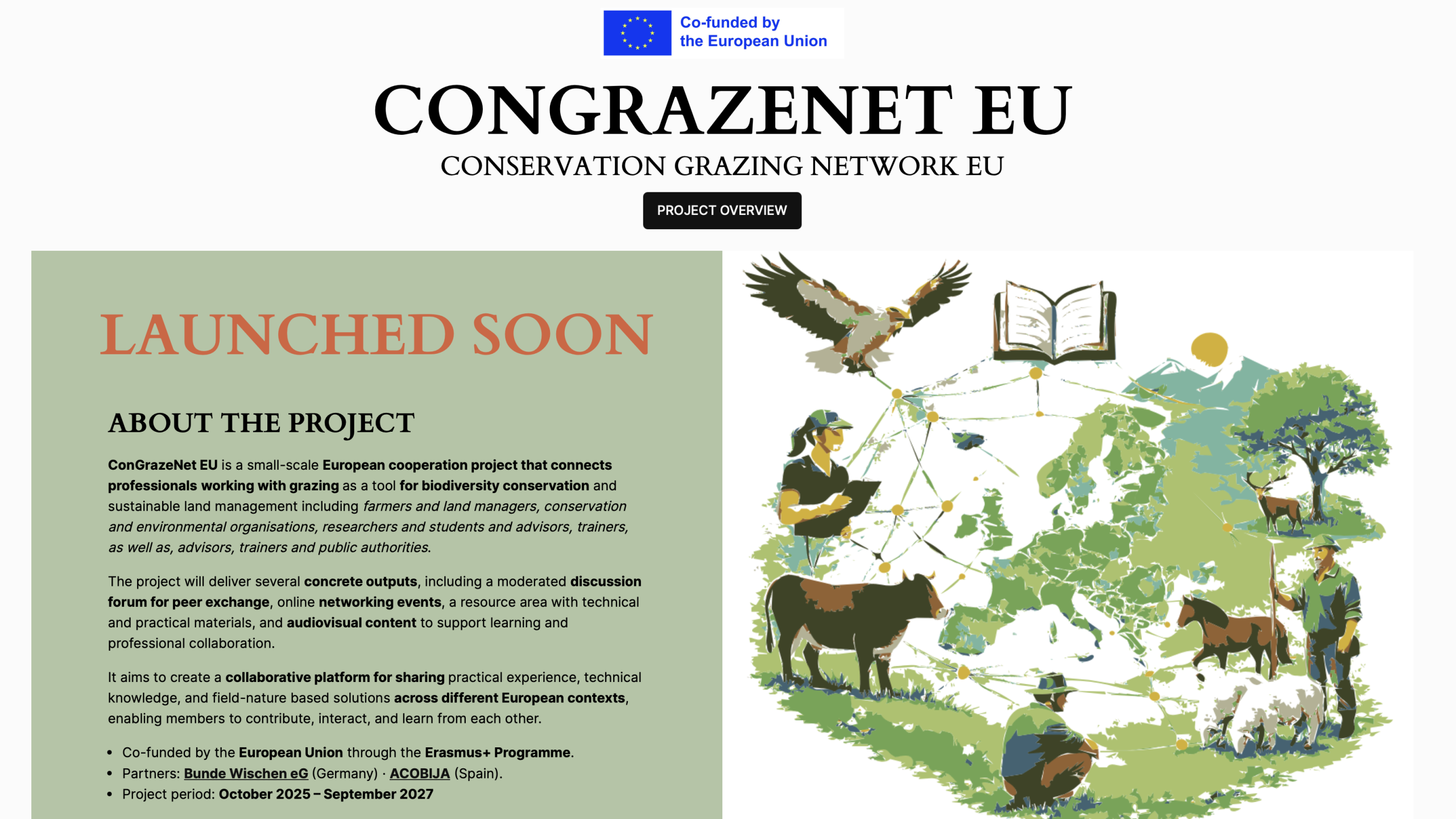
At the same time, we have launched the initial version of the project website, which will serve as the main communication and knowledge-sharing platform throughout the project implementation:
https://conservationgrazinghub.eu
This website will host project updates, practical resources and events. It will create opportunities for participation, with a strong focus on fostering collaboration and connections between people involved in conservation grazing. It will be an open space where professionals, organisations and stakeholders can connect, share experiences and learn from each other.
A project focused on conservation grazing as a tool for biodiversity and land management
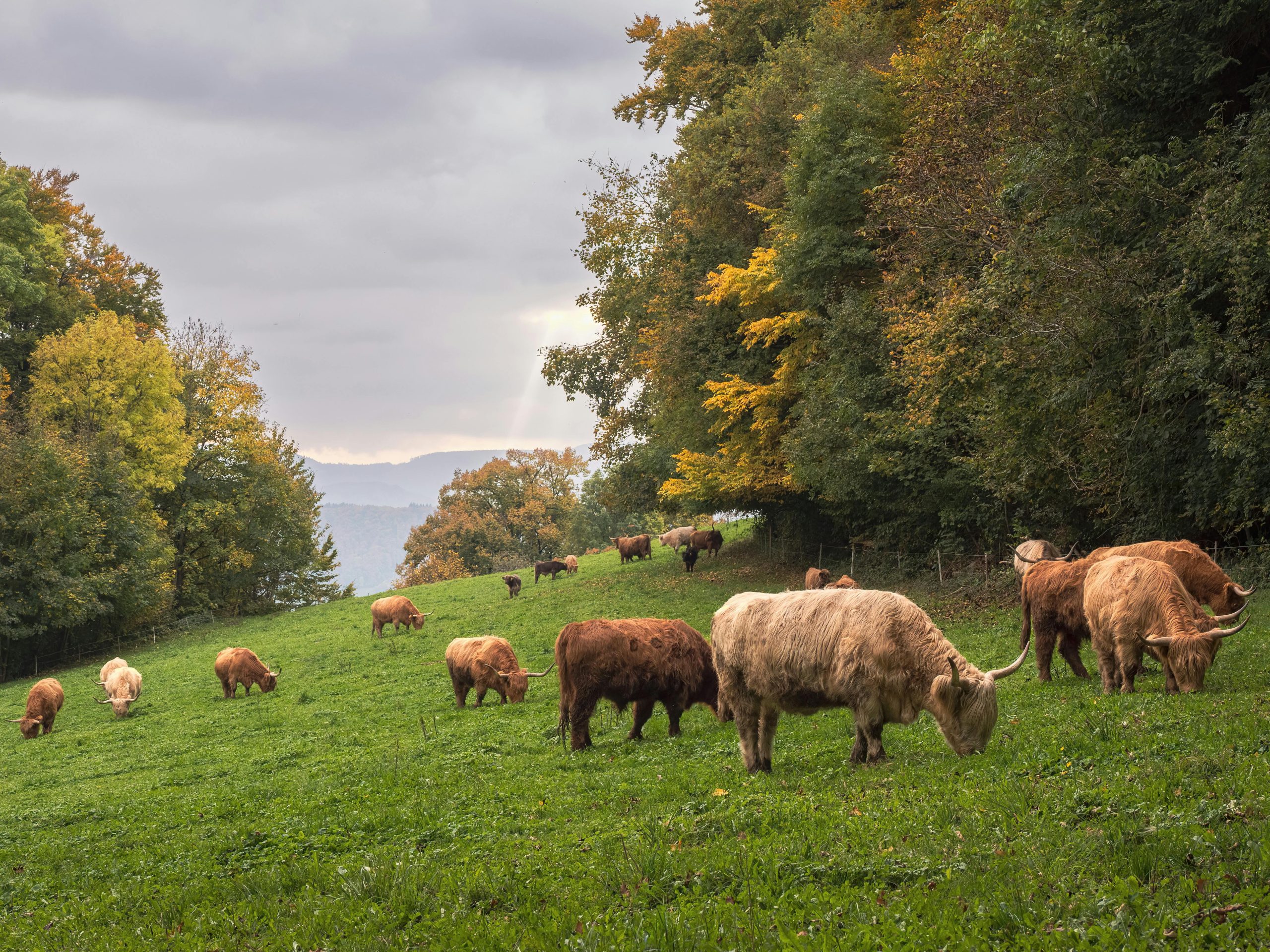
Conservation grazing is increasingly recognised as a practical and effective approach to maintaining biodiversity-rich habitats, managing landscapes and supporting sustainable land use. Across Europe, many High Nature Value (HNV) farming systems and Habitats of Community Interest identified under the Habitats Directive depend totally or partially on extensive livestock grazing. These systems rely on grazing to maintain their ecological functions, structure and species diversity.
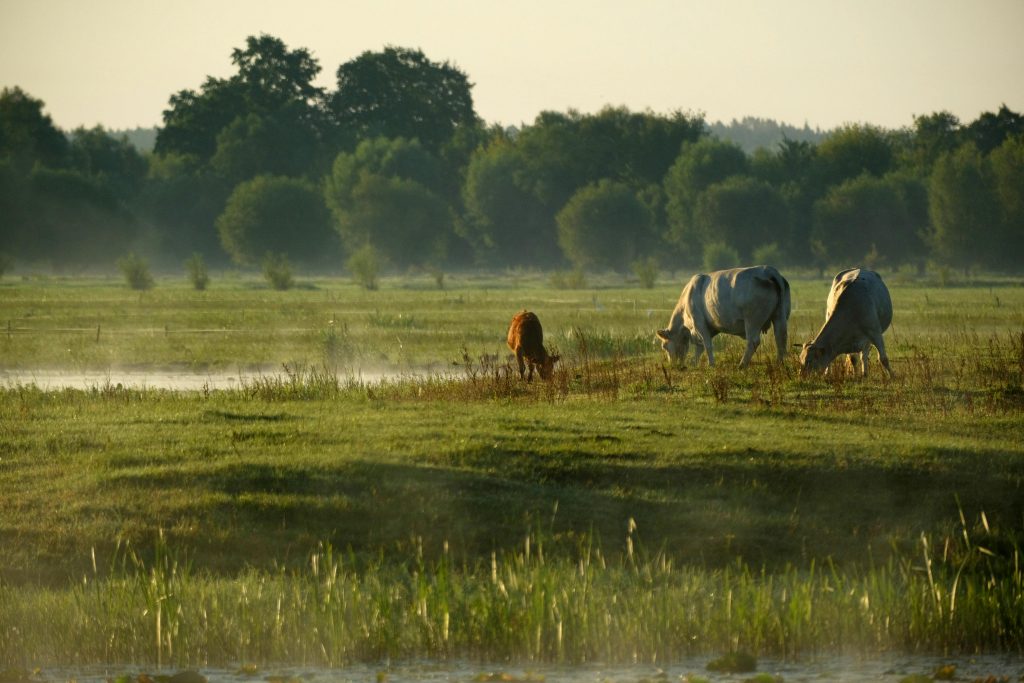
There is an urgent need to address both theintensification and the abandonment of grasslands across Europe. Proper management of the remaining biodiverse grasslands is essential. In particular, it helps to respond effectively to the pressing challenges of climate change and biodiversity loss. Moderate and well-managed grazing plays a key role in preserving semi-natural grasslands. It also prevents shrub encroachment, maintains open landscapes and sustains ecological connectivity across territories.
However, many land managers, practitioners and organisations still work in isolation. As a result, they often lack opportunities to exchange knowledge and experiences across regions and countries. The Conservation Grazing Network Europe project responds to this need. It creates a structured framework for cooperation, learning and participation. In this way, the project enables people to connect, share practical knowledge and promote good practices in conservation grazing.
The project strengthens the role of sustainable grazing as a practical tool for biodiversity conservation and resilient land management. At the same time, it builds a European network that supports collaboration between professionals, organisations and communities involved in the stewardship of grasslands and natural habitats. By facilitating knowledge exchange and cooperation, the project contributes to the long-term preservation and restoration of Europe’s valuable grassland ecosystems.
Objectives of the project
The Conservation Grazing Network Europe project has been designed with a clear and practical focus. Its objectives are centred on facilitating knowledge exchange, building professional connections and supporting the development of conservation grazing practices across Europe.
The main objectives of the project are:
- To promote conservation grazing as an effective tool for biodiversity conservation and sustainable land management
- To create opportunities for knowledge exchange and collaboration between practitioners, organisations and stakeholders
- To strengthen professional networks in the field of conservation grazing
- To provide practical learning resources and guidance for those involved in land management and nature conservation
- To support participation and engagement among people working in rural and environmental contexts
- To contribute to the development of sustainable grazing practices adapted to different landscapes and regional conditions
These objectives reflect the growing recognition of extensive grazing as a multifunctional land management practice that delivers environmental, social and economic benefits.
Main activities and actions
The project will run over a two-year period. It will include a series of practical activities designed to support learning, cooperation and participation.
The main actions planned within the project include:
Development of the project website and online platform
The website will serve as the central hub for communication, information sharing and participation. It will host project updates, resources and training materials. Furthermore, it will provide information about upcoming events. The platform will also create opportunities for stakeholders to connect and exchange experiences.
Creation of an online community forum
The project will establish an interactive forum to facilitate discussions between practitioners, organisations and professionals working in conservation grazing. This space will allow participants to share knowledge, ask questions and learn from real experiences in different regions.
Organisation of online and in-person events
The project will organise meetings, workshops and learning activities. These activities will support knowledge exchange and professional development. In addition, they will provide opportunities to discuss practical challenges, share solutions and build long-term cooperation.
Production of educational and communication materials
The project partners will develop practical resources, including short videos and guidance materials, to support learning and awareness about conservation grazing and sustainable land management.
International partner visits and field exchanges
Field visits will allow participants to observe conservation grazing practices in different contexts and landscapes. These exchanges will help strengthen cooperation and improve understanding of how grazing systems can support biodiversity and land management objectives.
Together, these activities will contribute to building a stronger and more connected European community working in conservation grazing.
Project partners
The project is implemented through cooperation between organisations with imacomplementary experience in nature conservation and land management and environmental education.
The project partners are:
Bunde Wischen eG (Germany)
Bunde Wischen is an organisation with extensive practical experience in nature conservation through grazing management. The organisation manages conservation areas using livestock and provides training and knowledge-sharing activities related to sustainable land management and biodiversity conservation.
Asociación Aragonesa para la Conservación de la Biodiversidad desde el valle del río Jalón – ACOBIJA (Spain)
ACOBIJA works to preserve biodiversity and promote sustainable land management through practical conservation actions, environmental education and collaboration with local communities and stakeholders. The organisation focuses on integrating extensive grazing into conservation strategies and territorial development.
Through this partnership, the project combines practical field experience, communication capacity and local knowledge, creating a strong foundation for cooperation and learning.
Participation and collaboration at the heart of the project
One of the key principles of the Conservation Grazing Network Europe project is participation. We encourage practitioners, organisations, researchers and stakeholders interested in conservation grazing to engage with the project and become part of the network. Participation can take many forms, including:
- Sharing practical experiences and case studies
- Taking part in discussions and events
- Contributing materials and resources
- Connecting with other professionals and organisations
- Supporting collaboration and learning across regions
By working together, we can strengthen the role of conservation grazing as a practical and effective tool for biodiversity conservation and sustainable land management.
Looking ahead
The Conservation Grazing Network Europe project marks the beginning of a collaborative process that will continue to develop over the coming months.
We are currently preparing the first activities. These include the development of the online platform, the organisation of initial meetings and the preparation of the first international partner visit.
We invite everyone interested in conservation grazing to follow the progress of the project. You can also connect with us through the project “Coming soon” webpage: https://conservationgrazinghub.eu
Together, we aim to build a stronger network, share knowledge and support sustainable land management across Europe.
Leave a Reply